Tuesday, 7 December 2010


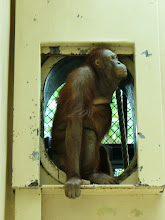
"In riding a horse we borrow freedom".
-Helen Thomson

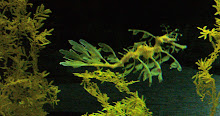
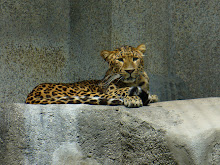
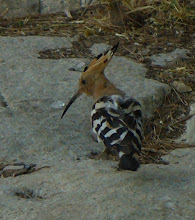
Picture V. Neblik, 2010.

Sunday, 5 December 2010

Science News- Links of the week- Pancreatic cancer


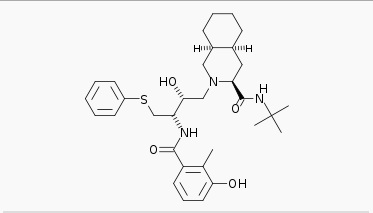
Nelfinavir molecule (no copyright)

Welcome to Weirdbeautiful.

Today's links are both on the subject of Pancreatic cancer. Long-feared as one of the most difficult cancers to treat, Pancreatic cancer has been the subject of two interesting articles in Britain's Daily Telegraph newspaper this year- the first of these, published back in February is this article by Richard Alleyne, reporting a study showing a connection between consumption of sugary soft-drinks (but not fruit juice) and increased incidence of pancreatic cancer. You can read the full newspaper article here- http://www.telegraph.co.uk/health/healthnews/7168769/Soft-drink-consumption-may-increase-risk-of-pancreatic-cancer.html

The study described in the article was by Noel T. Mueller and collegaues - you can find an abstract of it [here]- http://cebp.aacrjournals.org/content/19/2/447.abstract

Last Sunday, however, The Telegraph published the much gladder tidings that the anti-HIV drug Nelfinavir is showing remarkable and unexpected promise as a treatment for Pancreatic cancer. There is a blog post on that subject [here]-http://www.medicalnewstoday.com/articles/118819.php

you can find the full telegraph article online [HERE] - http://www.telegraph.co.uk/news/telegraphchristmasappeal/8164996/Telegraph-Christmas-Appeal-Last-year-I-was-dying-of-cancer.-Now-I-might-be-cured.html

Nelfinavir (also known as "Viracept") is a protease inhibitor - as its name suggests, it works against the HIV virus by preventing the virus's protease enyme from functioning. In cancer it seems to interfere with communication (cell signalling) processes of cancerous pancreatic
cells and to render them more vulnerable to being killed by radiotherapy.

Thursday, 2 December 2010

Cheering up Birds- Hornbills


Unknown Hornbill Species (Labelled as a West African species), artist unknown- possibly E. F Skinner, ca. 1910. Source: Harmsworth Natural History Volume 2, 1910 (further details on request).

Welcome to Weirdbeautiful.

Stumbleupon.com recently sent me this link to a gallery of beautiful bird pictures, from Great Egrets and Eagles to Kingfishers and Puffins. http://www.webdesigncore.com/2010/11/24/40-breathtaking-examples-of-bird-photography/

Sunday, 28 November 2010

Science update- Florida keys, The Lionfish derby and the death of Frank Fenner


Antennata Lionfish, picture taken in Zoo Schönbrunn, Vienna, Austria by Christian Mehlfuhrer (this image has a creative commons 2.5. licence- details [here])

Welcome to Weirdbeautiful.

First link of the day today is to this article on the Lion fish (also known as the Scorpion fish): a stunningly beautiful fish that has been popular in the pet trade for some time. The creature is native to the Indo pacific region but, after first being discovered in the Florida Keys area in 2009, has become a worryingly succesful invasive species there. In fact, Lionfish have now become such a major problem in the Caribbean and off the Florida keys, that an annual "lionfish derby" has been established to reduce their numbers - http://www.nytimes.com/2010/11/23/science/23lionfish.html?_r=1&ref=science

There is more information on Lionfish on wikipedia [here].

On a sadder note,Frank Fenner, who was perhaps best known for his work for the World Health Organisation's small pox eradication programme died this week. You can read his obituary in the New York Times [here], including his depressing prediction that mankind will become extinct- possibly within a century due to our over-exploitation of the environment.

Saturday, 20 November 2010

Science News- links of the week- Parthenogenesis in Boa constrictors and Why stress leads to sickness


Boa constrictor- picture by Leo Fleck (this image has a creative commons 2.5 licence- details [here])

Welcome (back) to Weirdbeautiful

Things have been a little quiet on this blog of late, for the simple reason that I have been juggling writing articles with conducting magazine interviews, scripting and producing two short films and preparing for some public talks (watch this space...). However, scientific progress continues relentlessly, so there have been quite a few interesting science stories in the news lately.

The biggest biological news of the last few weeks has been the discovery of parthenogenesis in Boa constrictors by Dr Warren Booth of the University of North Carolina. You can find the original press release of that story [here]and "Discover" Magazine's take on the news [here]

There will also be an exclusive interview with Dr Booth in the next issue of Practical Reptile Keeping Magazine.


If you have ever wondered why, when you are stressed, you are much more vulnerable to diseases, the emerging field of "Microbial Endocrinology" sets out to find the answers. In 1992, American endocrinologist Mark Lyte, of Texas Tech University in Lubbock, proposed that the situation was more complicated than just human stress hormones (cortisone, adrenaline etc) supressing the imune system, but rather that harmful bacteria are triggered to attack the body when these stress hormones are abundant. Prof Lyte and Dr Primrose Freestone of Leicester University, UK have now co-edited the first major book in the field; you can find more details here-

http://www2.le.ac.uk/news/blog/2010-archive/november/dawn-of-a-new-scientific-discipline-microbial-endocrinology


Tuesday, 16 November 2010

Quote of the week- Tatanga Mani


"I have learned a lot from trees; Sometimes about the weather, Sometimes about animals, Sometimes about the Great Spirits"
- Tatanga Mani (Walking Buffalo)
(1871-1967)

Sunday, 14 November 2010

Baby Dolphins and Electrons


"Dusky Dolphin"- Image by Allen McC (this image has a creative commons 2.5. licence- details [here] )

Good morning.
Welcome to Weirdbeautiful

Weird link of the day is this science blog post on electrons-
http://scienceblogs.com/startswithabang/2010/11/why_does_matter_take_up_space.php

and Beautiful link is this picture of a recovering baby dolphin (rescued from fisherman's nets)-
http://news.uk.msn.com/photos/week-in-pictures/photos.aspx?cp-documentid=155223214&page=2